Rosedil Ingredients: The Full 8-Nutrient Breakdown
Five B-vitamins, Vitamin C, Zinc, and Horsetail Extract targeting keratin production, follicle health, and hair strand strength.
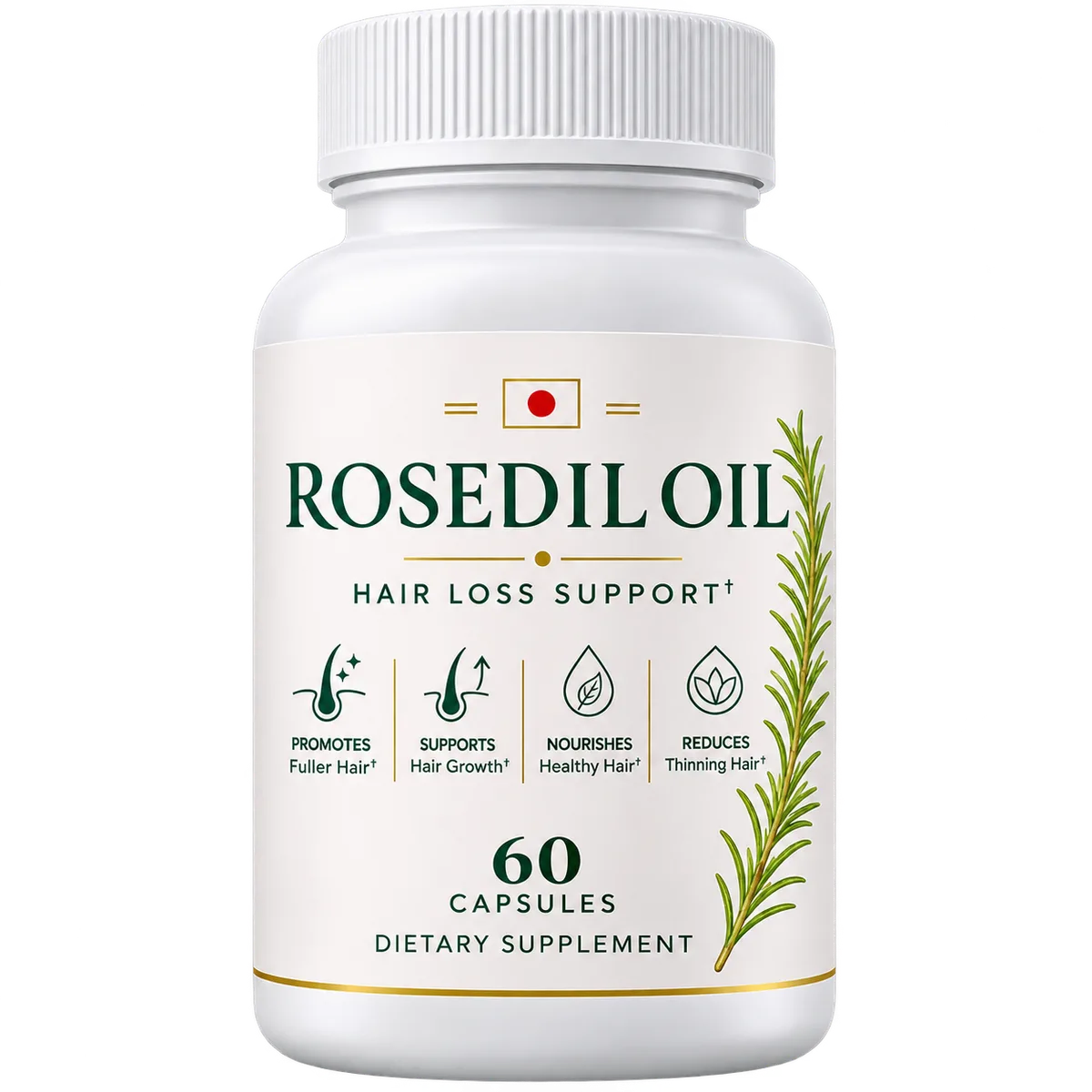
Rosedil takes a multi-angle approach to hair health: five B-vitamins that support keratin production and cellular energy in the hair matrix, two essential minerals for follicle cycling and collagen synthesis, and one botanical extract that provides natural silica for strand strength. Each ingredient has published research relevant to hair biology, and the formula covers more pathways than a standalone biotin supplement. Here’s exactly what’s inside and what the science actually says.
Quick Verdict: A transparent, multi-nutrient formula with clinically relevant doses — Biotin at 4,620 mcg for keratin, Zinc at 109% DV for follicle health, and Horsetail Extract for natural silica. Eight ingredients working together on three hair-health pathways. The 60-day money-back guarantee gives you time to evaluate results personally.
The Three Pathways: How Rosedil’s Formula Works
Rosedil’s ingredients work through three primary mechanisms:
Pathway 1 — Keratin production. Biotin, Vitamin B6, and Pantothenic Acid are all involved in the metabolic processes that build keratin — the structural protein that makes up 95% of your hair. Biotin acts as a coenzyme for carboxylase enzymes, B6 supports amino acid metabolism, and B5 feeds into Coenzyme A production.
Pathway 2 — Follicle nourishment. Zinc regulates the hair follicle growth cycle and supports the oil glands that protect each strand. Vitamin C is essential for collagen, which anchors follicles in the scalp. Niacin (B3) supports blood circulation to the scalp, delivering oxygen and nutrients.
Pathway 3 — Structural integrity. Horsetail Extract provides organic silica, a trace mineral that contributes to strand elasticity and resistance to breakage. Calcium supports cell signaling within the follicle, particularly during growth-phase transitions.
Ingredient #1: Vitamin C (157 mg, 175% DV)
What it is: A water-soluble antioxidant required for collagen synthesis, iron absorption, and protection against oxidative stress.
Role in hair health: Collagen makes up part of the dermis — the skin layer that houses hair follicles. Adequate Vitamin C ensures the body can produce the collagen needed to anchor follicles securely. It also enhances non-heme iron absorption, and iron deficiency is one of the most common nutritional causes of hair loss in women. As an antioxidant, Vitamin C protects follicle cells from free-radical damage that can disrupt the growth cycle.
Dosing context: The recommended daily intake is 90 mg for men and 75 mg for women. At 157 mg, Rosedil provides 175% DV — well above baseline needs and consistent with antioxidant-support doses used in dermatology research.
Ingredient #2: Niacin / Vitamin B3 (30 mg, 188% DV)
What it is: An essential B vitamin involved in NAD+/NADH production, energy metabolism, and blood vessel function.
Role in hair health: Niacin supports vasodilation — the widening of blood vessels that improves circulation to the scalp. Better scalp blood flow means more oxygen and nutrients reaching hair follicles. Some research has examined topical niacin derivatives (nicotinamide) for their role in increasing hair fullness, suggesting the nutrient has direct relevance to the hair growth environment. Niacin also supports cellular energy production in the rapidly dividing cells of the hair matrix.
Dosing context: The RDA is 16 mg for men and 14 mg for women. At 30 mg (188% DV), this is a moderate dose — above baseline needs but well below levels associated with significant flushing (which typically occurs at 100+ mg of nicotinic acid).
Ingredient #3: Vitamin B6
What it is: A water-soluble vitamin involved in over 100 enzymatic reactions, particularly amino acid metabolism and hemoglobin formation.
Role in hair health: B6 helps the body metabolize the amino acids that become keratin. It also supports hemoglobin production — the protein in red blood cells that carries oxygen to the scalp and follicles. Vitamin B6 deficiency has been associated with seborrheic dermatitis, a scalp condition characterized by flaking and inflammation that can contribute to hair loss. Adequate B6 helps maintain a healthy scalp environment for growth.
Ingredient #4: Biotin / Vitamin B7 (4,620 mcg, 15,400% DV)
What it is: A water-soluble B vitamin that serves as a coenzyme for five carboxylase enzymes involved in fatty acid synthesis, amino acid metabolism, and gluconeogenesis.
Role in hair health: Biotin is the most widely recognized hair-health nutrient. It is essential for keratin infrastructure — without adequate biotin, the body cannot efficiently produce the keratin that makes up hair, skin, and nails. Biotin deficiency causes well-documented hair loss, brittle nails, and skin rash.
Published research highlights:
• A 2015 study published in Dermatology Research and Practice found that women with self-perceived thinning hair who took an oral supplement containing biotin showed a significant increase in hair growth in areas affected by hair loss after 90 and 180 days.
• A systematic review in Skin Appendage Disorders noted that biotin supplementation improved hair and nail growth in all published cases involving biotin deficiency.
• The evidence for supplementation in non-deficient individuals is less conclusive, but subclinical deficiency may be more common than previously thought — pregnancy, alcohol use, smoking, and certain medications can deplete biotin levels.
Worth noting: At 4,620 mcg (15,400% DV), Rosedil provides a dose consistent with clinical study protocols. The high %DV reflects that biotin is water-soluble — excess is excreted in urine, not stored. The main caution is that high-dose biotin can interfere with certain lab tests (see the side effects article). The 60-day guarantee lets you evaluate whether the formula works for your hair specifically.
Ingredient #5: Pantothenic Acid / Vitamin B5
What it is: An essential B vitamin required for synthesizing Coenzyme A (CoA), which is involved in fatty acid metabolism, energy production, and stress hormone regulation.
Role in hair health: B5 supports the adrenal glands, which produce cortisol and other stress hormones. Chronic stress is a well-documented trigger for telogen effluvium — a condition where stress pushes hair follicles prematurely into the resting (shedding) phase. By supporting a healthy stress response, B5 may help maintain normal hair growth cycling. Panthenol (a derivative of B5) is also widely used in topical hair products for its moisturizing and strengthening effects on hair strands.
Ingredient #6: Calcium
What it is: An essential mineral best known for bone health, but also involved in cellular signaling, enzyme function, and nerve transmission.
Role in hair health: Calcium ions play a regulatory role in the hair follicle growth cycle. Research has shown that calcium signaling is involved in the transition between anagen (growth) and catagen (regression) phases. Proper calcium signaling helps follicles complete full growth cycles rather than prematurely entering the shedding phase. While calcium deficiency primarily affects bones and teeth, its role in cellular signaling makes it a supporting nutrient for normal follicle function.
Ingredient #7: Zinc (12 mg, 109% DV)
What it is: An essential trace mineral involved in over 300 enzymatic reactions, including DNA synthesis, cell division, protein synthesis, and immune function.
Role in hair health: Zinc is critical for hair tissue growth and repair. It helps maintain the oil glands around hair follicles (sebaceous glands), which protect and lubricate each strand. Zinc deficiency is one of the best-documented nutritional causes of hair loss.
Published research highlights:
• A study in the Annals of Dermatology found significantly lower serum zinc levels in patients with alopecia areata, telogen effluvium, and female pattern hair loss compared to healthy controls.
• Zinc supplementation improved hair regrowth in patients with alopecia areata who had low serum zinc levels.
• Zinc plays a role in the structural integrity of keratin — the same protein biotin helps produce.
Dosing context: The RDA for zinc is 11 mg for men and 8 mg for women. At 12 mg (109% DV), Rosedil provides a clinically relevant dose without approaching the tolerable upper limit (40 mg). Zinc is better absorbed when taken with food.
Ingredient #8: Horsetail Extract (25 mg)
What it is: An extract from Equisetum arvense, one of the richest natural sources of organic silica. Also contains antioxidant flavonoids and phenolic compounds.
Role in hair health: Silica is a trace element that contributes to the strength and elasticity of connective tissues, including hair strands. Organic silica from Horsetail Extract is more bioavailable than mineral silica supplements.
Published research highlights:
• A randomized, double-blind study published in the Archives of Dermatological Research found that women taking an oral supplement containing a standardized silica compound (derived from horsetail) showed statistically significant improvements in hair strand elasticity and tensile strength after 6 months of use.
• Silica is a component of the cross-links between keratin molecules that give hair its structural integrity and resistance to breakage.
• Horsetail extract also has mild diuretic and antioxidant properties, though these are secondary to its silica content in the context of a hair formula.
Worth noting: At 25 mg, Rosedil provides horsetail extract as a supporting ingredient rather than a primary-dose botanical. Its value is in providing organic silica that complements the keratin-building role of Biotin and the follicle-supporting role of Zinc. The transparent labeling means you can see exactly how much is included.
Other Ingredients
The inactive ingredients in Rosedil are standard for capsule supplements: microcrystalline cellulose (filler), gelatin (capsule shell), silicon dioxide (anti-caking agent), magnesium stearate (flow agent), and titanium dioxide (colorant). None of these are unusual or concerning in the quantities typically used in dietary supplements.
Note: The gelatin capsule means Rosedil is not suitable for vegans or vegetarians who avoid animal-derived gelatin.
Frequently Asked Questions
What are the ingredients in Rosedil?
Vitamin C (157mg), Niacin/B3 (30mg), Vitamin B6, Biotin (4,620mcg), Pantothenic Acid/B5, Calcium, Zinc (12mg), and Horsetail Extract (25mg). The formula targets keratin production, follicle nourishment, and hair strand structure through three distinct pathways.
Does Biotin actually help with hair growth?
Biotin is a coenzyme required for keratin synthesis — the structural protein that makes up 95% of hair. Biotin deficiency clearly causes hair loss, and supplementation resolves it. Research on non-deficient individuals is mixed, but subclinical deficiency may be more common than previously recognized. The 60-day guarantee lets you evaluate personally.
Does Rosedil contain any drugs or hormones?
No. Rosedil contains only naturally occurring vitamins, minerals, and one botanical extract. No minoxidil, no finasteride, no hormones, no stimulants, no caffeine.