
How Long Does Rosedil Take to Work?
A realistic timeline based on hair biology, nutrient absorption research, and the hair growth cycle. No hype, just science.
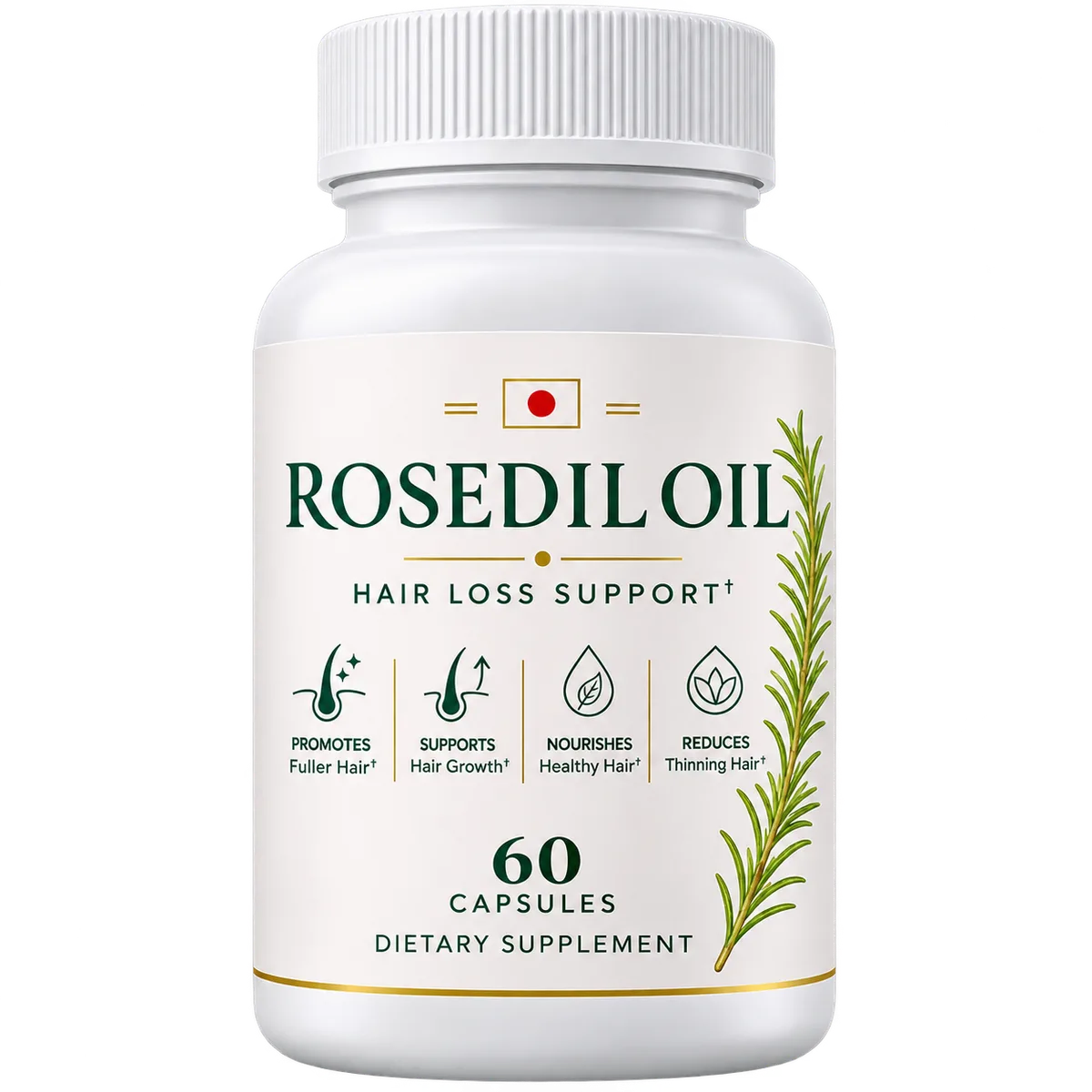
Quick Verdict: Expect reduced shedding around weeks 4–6, improved hair texture and strength around weeks 8–12, and visible fullness at 3–6 months. Hair grows ~0.5 inches/month, so patience is required. The 60-day guarantee covers the early-results window; the 3-bottle package (90 days) covers the full evaluation period.
Why Hair Supplements Take Time
Before discussing Rosedil specifically, it helps to understand why no hair supplement delivers overnight results. Three biological factors control the timeline:
1. The hair growth cycle. Each hair follicle cycles through anagen (growth, 2–7 years), catagen (transition, 2–3 weeks), and telogen (rest/shedding, 2–3 months). At any given time, about 85–90% of your hair is in anagen. When nutrients improve follicle health, they affect follicles currently in or entering anagen — not follicles in the resting phase.
2. Hair growth rate. Hair grows approximately 0.5 inches (1.25 cm) per month. Even if nutrient supplementation immediately improves the quality of new growth, it takes months for enough new hair to be visible against existing hair.
3. Nutrient replenishment. If you have subclinical deficiencies in Biotin, Zinc, or other nutrients, it takes 2–4 weeks of consistent supplementation to restore adequate levels. The follicle then needs additional time to respond to improved nutrient availability.
The Rosedil Results Timeline
Foundation Phase
Your body absorbs and begins utilizing the nutrients. Water-soluble vitamins (B-vitamins, Vitamin C) reach effective levels quickly. You’re unlikely to notice any visible hair changes. Some people report improved nail strength as an early signal, since nails and hair share keratin.
Nutrient Levels Stabilize
Zinc and Biotin levels have had time to stabilize. If you had subclinical deficiencies, your body is now working with adequate raw materials. Hair follicles in the anagen phase begin incorporating improved nutrient availability. Still unlikely to see visible hair changes, but the groundwork is being laid.
First Possible Signs
Some users notice reduced shedding — fewer hairs in the shower drain, on the pillow, or in the hairbrush. This suggests that follicles are spending more time in the growth phase and less time in premature shedding. Nail improvements are more noticeable. Hair texture may feel slightly different.
Visible Improvements Begin
The most commonly reported timeline for noticeable changes. New growth has had 2–3 months to develop, and strands produced under improved nutrient conditions are stronger and thicker. Users may notice: improved hair texture, shinier appearance, less breakage, baby hairs along the hairline, and continued reduction in shedding.
Full Results
The most significant visible changes occur in this window. Hair that was in telogen (resting) when you started has cycled back into anagen under improved conditions. Overall hair density and volume improvements become apparent. This is when the cumulative effect of months of improved follicle nutrition becomes truly visible.
Factors That Affect Your Timeline
Individual results vary based on several factors:
• Severity of nutritional deficiency: If you have significant deficiencies in Biotin, Zinc, or B-vitamins, you may see faster improvement as supplementation corrects the gap. If your levels are already adequate, the effect will be subtler.
• Cause of hair loss: Nutritional support works best for telogen effluvium (stress/diet-related shedding) and general thinning from nutrient gaps. It has minimal impact on androgenetic alopecia (genetic pattern hair loss).
• Consistency: Taking Rosedil daily without gaps is essential. Skipping days disrupts the steady nutrient supply your follicles need.
• Diet and lifestyle: Supplementation works alongside, not instead of, a balanced diet. High-protein diet, adequate sleep, and managed stress all support hair health.
• Age: Younger individuals typically see faster results due to more active follicle cycling.
How to Track Your Progress
Visible hair changes happen slowly — you see yourself every day, so gradual improvements are easy to miss. Here’s how to track objectively:
• Baseline photos: Take photos in consistent lighting on day 1. Include the hairline, the part, and the crown. Repeat every 30 days in the same lighting and angle.
• Shedding count: Count hairs in your brush or shower drain for 3 consecutive days at the start. Repeat the count monthly. Normal shedding is 50–100 hairs/day; a decrease suggests improvement.
• Hair journal: Note texture changes, breakage, shine, and how your hair feels when you run your fingers through it. These subjective markers often precede visible density changes.
Important: Do not evaluate Rosedil based on the first 30 days alone. Hair biology requires at least 60–90 days for meaningful assessment. If you see no change whatsoever after 90 days of consistent use, the formula likely isn’t addressing your specific cause of hair loss — consult a dermatologist.
Frequently Asked Questions
How long does Rosedil take to work?
Initial changes (reduced shedding, improved texture) may begin around weeks 4–6. More visible results at 8–12 weeks. Full results at 3–6 months of consistent daily use.
Why does it take so long?
Hair grows ~0.5 inches/month. Nutrients affect new growth, not existing hair. It takes weeks for follicles to respond and months for enough new growth to be visible. This applies to any hair supplement, not just Rosedil.
What if I don’t see results after 60 days?
Two options: use the 60-day guarantee for a refund, or continue 30 more days if you’ve noticed early signs. If zero change after 90 days, the formula likely isn’t addressing your specific cause — consult a dermatologist.