
Melonex Ingredients: The Full 3-Ingredient Breakdown
Three amino acids targeting one pathway: nitric oxide production for cardiovascular and blood flow support.
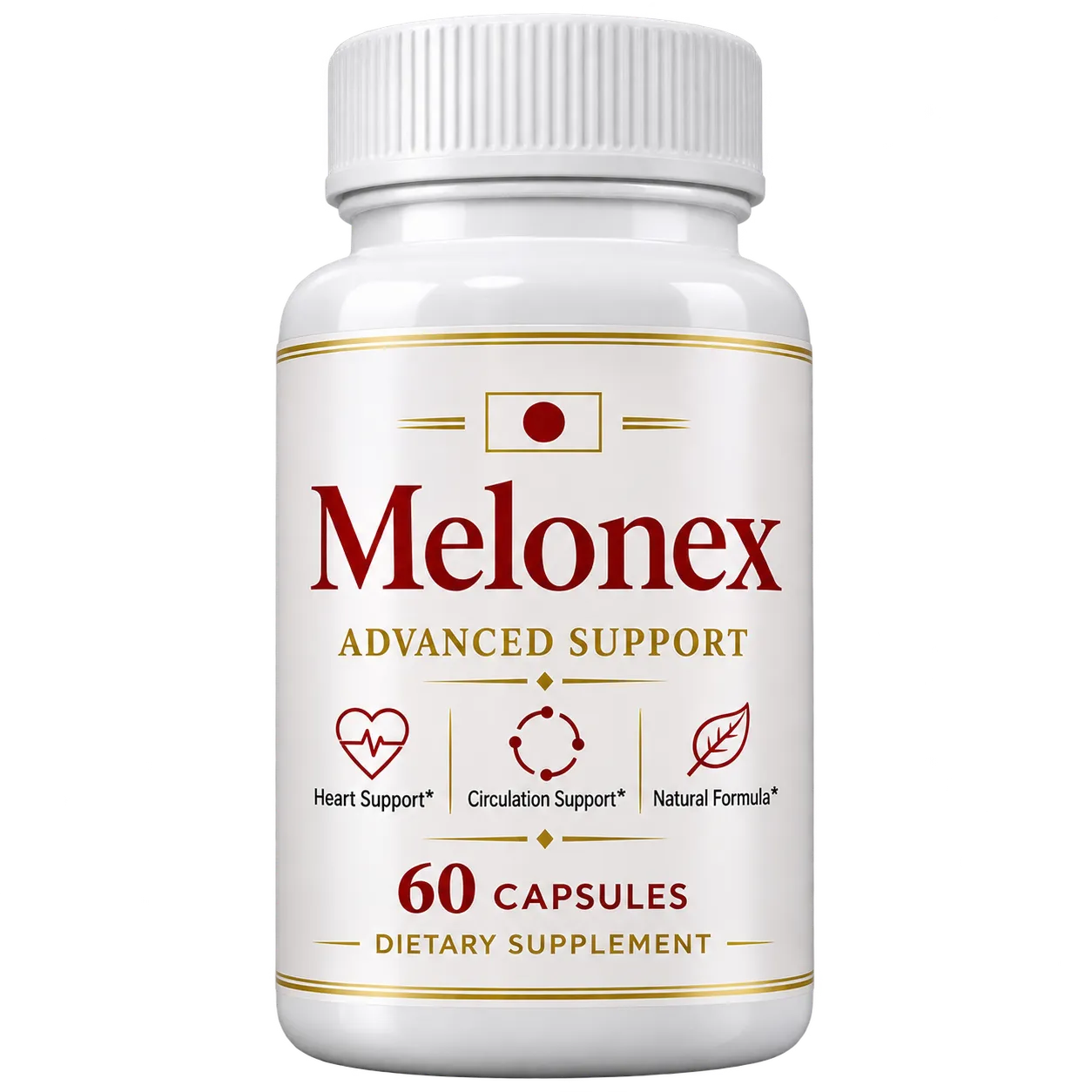
Melonex takes a minimalist approach to cardiovascular support: three amino acids, all targeting the same nitric oxide pathway. No proprietary blends with 15 mystery ingredients. No botanical extracts with unclear dosing. Just three well-studied amino acids in a 500mg capsule. The simplicity is both its strength and its limitation — here's the full breakdown.
Quick Verdict: A clean, transparent blend of L-Citrulline DL-Malate, L-Arginine AAKG, and L-Arginine HCL — three amino acids with decades of published cardiovascular research. No stimulants, no hormones, no botanical extracts. The minimalist 500mg capsule targets the nitric oxide pathway from multiple angles, and the 60-day money-back guarantee gives you a full two months to evaluate how your body responds.
The Nitric Oxide Pathway: How All Three Work Together
All three ingredients in Melonex converge on the same biological mechanism: increasing nitric oxide (NO) availability in the body. Nitric oxide is a signaling molecule that relaxes blood vessel walls, allowing them to dilate. This dilation improves blood flow throughout the cardiovascular system.
The two L-Arginine forms provide direct substrate for nitric oxide synthesis — L-Arginine is converted to NO by the enzyme nitric oxide synthase (eNOS). L-Citrulline takes a slightly different route: it's first converted to L-Arginine in the kidneys, then follows the same NO pathway. Research suggests L-Citrulline may actually raise blood L-Arginine levels more effectively than taking L-Arginine directly, because L-Arginine taken orally is partially broken down in the gut and liver before reaching circulation.
By combining both direct (L-Arginine) and indirect (L-Citrulline) pathways, Melonex aims to maximize nitric oxide availability from multiple angles.
Ingredient #1: L-Citrulline DL-Malate
What it is: L-Citrulline is a non-essential amino acid naturally found in watermelon. The DL-Malate form combines L-Citrulline with malic acid, which plays a role in the Krebs cycle (cellular energy production). This combination is commonly used in sports nutrition and cardiovascular supplements.
How it works: L-Citrulline is absorbed in the intestines and transported to the kidneys, where it's converted to L-Arginine. This L-Arginine then becomes available for nitric oxide production. Research suggests this conversion pathway may be more efficient than taking L-Arginine directly because it bypasses first-pass metabolism in the liver.
Published research: A systematic review examined L-Citrulline supplementation for blood pressure and found that consistent daily use for 4–8 weeks produced measurable reductions in systolic blood pressure. L-Citrulline is one of the most studied amino acids for cardiovascular support, and the DL-Malate form adds an energy metabolism component through the Krebs cycle.
The malic acid component: Malic acid participates in the Krebs cycle, the cellular process that generates ATP (energy). Some research suggests the combination of citrulline with malate may support both blood flow and energy production, though the evidence for malic acid's standalone contribution is limited at the doses likely present in Melonex.
Ingredient #2: L-Arginine Alpha-Ketoglutarate (AAKG)
What it is: AAKG combines the amino acid L-Arginine with alpha-ketoglutarate, an intermediate in the Krebs cycle. This form was popularized in sports nutrition for its potential role in nitric oxide production and exercise performance.
How it works: L-Arginine serves as the direct precursor to nitric oxide — the enzyme eNOS converts L-Arginine to NO and L-Citrulline. The alpha-ketoglutarate component theoretically supports energy metabolism and may help buffer ammonia during physical activity.
Published research: L-Arginine has been studied extensively for cardiovascular applications. A meta-analysis found that L-Arginine supplementation may improve endothelial function in people with cardiovascular risk factors. The AAKG form adds the alpha-ketoglutarate component for energy metabolism support. L-Arginine is one of the most widely used amino acids in both sports nutrition and cardiovascular supplementation.
Important caveat: L-Arginine taken orally undergoes significant first-pass metabolism — a large portion is broken down before reaching systemic circulation. This is why some researchers consider L-Citrulline a more efficient way to raise blood arginine levels.
Ingredient #3: L-Arginine HCL
What it is: L-Arginine hydrochloride — the most common supplemental form of L-Arginine. The HCL salt improves stability and absorption compared to free-form L-Arginine.
How it works: Same mechanism as AAKG — direct substrate for nitric oxide synthase. The HCL form provides L-Arginine in a more bioavailable format.
Published research: L-Arginine HCL is the form used in many clinical studies on cardiovascular health. Research has examined its effects on blood pressure, endothelial function, and exercise tolerance. A Cochrane review noted that while L-Arginine supplementation shows some promise for cardiovascular endpoints, the quality of evidence is moderate and results are inconsistent across studies.
Why two forms of L-Arginine? Including both AAKG and HCL forms may provide slightly different absorption profiles and additional metabolic support from the alpha-ketoglutarate. However, both ultimately deliver the same amino acid to the same pathway.
The Dosing Approach
Melonex takes a minimalist approach: 500mg per capsule (up to 1,000mg at two capsules daily), split across three amino acids that all feed the same nitric oxide pathway. Rather than mega-dosing a single ingredient, the formula combines direct and indirect NO pathways for a multi-angle approach.
The manufacturer recommends consistent daily use, and the 60-day money-back guarantee gives you a full two months to evaluate how your body responds. Many users report that the best way to assess amino acid supplementation is through consistent use over several weeks — and that personal experience is more meaningful than comparing dose numbers across different studies and formulations.
Worth noting: The total blend weight (500mg) is disclosed on the label. Individual amino acid amounts within the blend follow standard practice across the supplement industry. The 60-day money-back guarantee lets you evaluate the formula's effectiveness personally.
Inactive Ingredients
Beyond the three active amino acids, the capsule contains standard inactive ingredients:
• Hydroxypropyl methylcellulose (HPMC) — The capsule shell. This is a plant-based alternative to gelatin, making the capsule suitable for vegetarians.
• Microcrystalline cellulose — A common filler that helps maintain capsule consistency and aids in manufacturing.
• Magnesium stearate — A flow agent used in capsule manufacturing to prevent ingredients from sticking to equipment.
All three are standard, well-established excipients used across the supplement industry. No artificial colors, no preservatives, no allergens listed.
Full Ingredient Table
| Ingredient | Dose | Primary Role |
|---|---|---|
| L-Citrulline DL-Malate | In 500mg blend | Indirect NO production via kidney conversion |
| L-Arginine AAKG | In 500mg blend | Direct NO substrate + energy metabolism |
| L-Arginine HCL | In 500mg blend | Direct NO substrate (bioavailable form) |
Stimulant-free. Hormone-free. Caffeine-free. Vegetarian capsule (HPMC). No artificial colors or preservatives.
Frequently Asked Questions
What are the ingredients in Melonex?
Three amino acids in a 500mg blend: L-Citrulline DL-Malate, L-Arginine Alpha-Ketoglutarate (AAKG), and L-Arginine HCL. All three target nitric oxide production for cardiovascular and blood flow support. The capsule shell is plant-based (HPMC).
Is 500mg enough for nitric oxide benefits?
Melonex takes a multi-pathway approach rather than mega-dosing a single amino acid. The 500mg blend combines three NO precursors that work through different mechanisms. The manufacturer recommends consistent daily use, and the 60-day guarantee gives you two full months to evaluate the results in your own body — the most reliable test available.
Does Melonex contain stimulants or hormones?
No. The formula contains only three amino acids plus standard inactive capsule ingredients. No stimulants, no hormones, no caffeine, no botanical extracts.
Melonex is a dietary supplement and has not been evaluated by the FDA. Not intended to diagnose, treat, cure, or prevent any disease.