
Collagen Filler Serum Ingredients: Full Breakdown
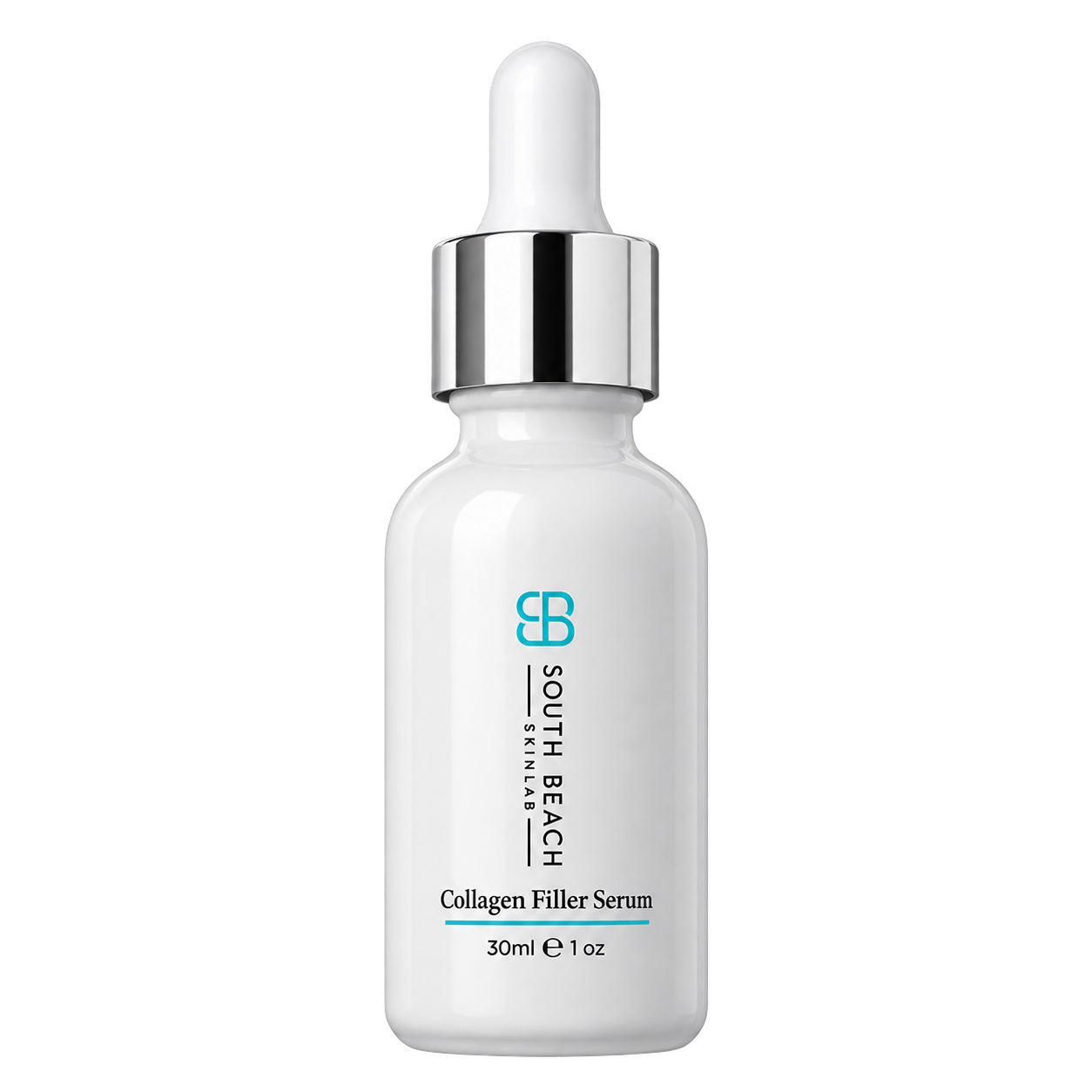
South Beach Skin Lab lists six ingredients in their Collagen Filler Serum. Three are the active workhorses; three are supporting botanicals. Individual concentrations are not disclosed — which is common in skincare but means you can't compare doses to published research. Here's what each ingredient does and what the science actually says about it.
Quick summary: Three active ingredients (soluble collagen, SYN-COLL peptide, sodium hyaluronate) with documented roles in skin science, plus three botanical extracts (algae, plankton, rosemary) and citric acid for pH balance. The formula is paraben-free, sulfate-free, phthalate-free, and cruelty-free. Individual concentrations are not disclosed.
The Three Active Ingredients
Soluble Collagen. Low-molecular-weight collagen designed to penetrate the stratum corneum (outer skin layer) based on the 500 Dalton rule — a published dermatological principle that molecules under 500 Daltons can pass through the skin barrier. This is the immediate, visible ingredient: it hydrates and temporarily plumps the skin surface on contact, filling the appearance of fine lines from the outside. The effect is real but temporary — it works through hydration, not structural rebuilding.
SYN-COLL / Palmitoyl Tripeptide-5. A patented peptide that signals fibroblasts (the cells that produce collagen) to increase collagen synthesis. Published research on SYN-COLL shows it can stimulate type I collagen production in skin cell cultures. This is the longer-term mechanism — the effect builds over weeks of consistent use. The concentration in this formula is not disclosed.
Sodium Hyaluronate. A low-molecular-weight form of hyaluronic acid that attracts and retains moisture in the deeper skin layers. One of the most documented hydration ingredients in skincare. Supports the plumper, smoother appearance and creates the moisture environment collagen needs to regenerate.
Supporting Botanical Ingredients
Algae Extract. Marine-derived botanical used for skin conditioning and hydration. Provides minerals and antioxidants that complement the collagen and hyaluronic acid base. Specific concentration not disclosed.
Plankton Extract. Another marine-derived conditioning ingredient. The manufacturer includes it as part of the botanical formula without disclosing concentration or standardized form.
Rosemary Leaf Extract. A botanical with documented antioxidant properties that helps protect skin from environmental stress and oxidative damage.
Citric Acid. Used to adjust the formula's pH for optimal skin compatibility. Standard in cosmetic formulations.
What's Not in It
The formula is listed as paraben-free, sulfate-free, phthalate-free, BHA-free, and cruelty-free. No fragrances. The manufacturer states it's suitable for sensitive and mature skin types.
The transparency gap: individual ingredient concentrations are not publicly disclosed. You know what's inside but not how much of each. For SYN-COLL in particular — a peptide where concentration matters for effectiveness — this is a meaningful limitation. You can't evaluate whether the amount is enough to produce the collagen synthesis effect the research describes.
Frequently Asked Questions
What are the main ingredients in Collagen Filler Serum?
Three actives: Soluble Collagen (low molecular weight for skin penetration), SYN-COLL / Palmitoyl Tripeptide-5 (patented peptide for collagen synthesis), and Sodium Hyaluronate (hyaluronic acid for deep hydration). Plus algae extract, plankton extract, rosemary leaf extract, and citric acid.
Is the collagen in this serum different from regular collagen?
Yes. Most collagen molecules are too large to penetrate skin. This formula uses soluble collagen with a molecular weight designed to pass through the outer skin layer based on the 500 Dalton rule.
Are ingredient concentrations disclosed?
No. Individual concentrations are not publicly disclosed. You know what's inside but not how much of each ingredient.
Collagen Filler Serum is a topical cosmetic product. These statements have not been evaluated by the FDA. Not intended to diagnose, treat, cure, or prevent any disease.